 Last updated: August 2026
Finding sustainable underwear isn't as easy as it should be. Most of us need a fairly constant supply of it, but the options for ethical and sustainable underwear can feel surprisingly limited. Especially if you want something beyond basic bralettes, need a wider range of sizes, or simply want underwear that feels like something you'd actually enjoy wearing.
I've spent a lot of time looking for sustainable lingerie brands that make comfortable, well-designed underwear from better materials, while also being transparent about how and where their products are made. There are some great options out there, from organic cotton basics and recycled lace to bamboo underwear and supportive bras for larger busts. But there's also plenty of vague "eco-friendly" marketing, which makes knowing where to shop unnecessarily difficult.
So, as with my other sustainable shopping guides, I've done the digging for you. This guide covers some of the best sustainable underwear brands, including options for organic cotton underwear, bamboo underwear, sustainable bras for larger busts, everyday knickers and more. I've focused on brands that provide useful information about their materials, manufacturing and workers' rights, and included my personal favourites where I've actually tried their underwear.

What Makes Underwear Sustainable?
"Sustainable" isn't a protected term, which means pretty much any brand can use it. This is particularly frustrating when shopping for underwear because sustainability claims can be based on something as simple as using one supposedly eco-friendly fabric, while completely ignoring how the garment was made.
When I'm looking at sustainable underwear brands, I want to see more than a claim that something is "green" or "conscious". I look at the materials used, where the underwear is made, how transparent the brand is about its supply chain and what information it provides about the people making its products.
Materials are one part of the picture. Organic cotton, recycled fibres and responsibly produced alternatives can all be better choices than conventional materials, but no single fabric makes a garment sustainable. Even bamboo, which is a fast-growing and renewable crop, needs to be processed into a textile, so it's worth looking at how that happens rather than assuming bamboo automatically means better.
Durability matters too. Underwear is washed frequently and needs to withstand a lot of wear, so a well-made pair that lasts is more useful than something made from a supposedly sustainable material that quickly loses its shape. Fit is part of this as well. If something is uncomfortable, doesn't provide enough support or doesn't fit properly, you're unlikely to wear it for long.
I'm also looking for brands that are transparent about workers' rights and manufacturing. Where are their products made? Do they disclose their factories? Are workers paid fairly? Are there certifications or independent standards in place? I'm not expecting every small brand to have a perfect supply chain, but I do expect them to be honest about where they're at and what they're doing to improve.
Ultimately, I don't think sustainable underwear needs to be perfect. I'd rather buy a pair I'll wear constantly from a brand that's transparent about its limitations than something covered in green marketing that tells me very little about how it was actually made.
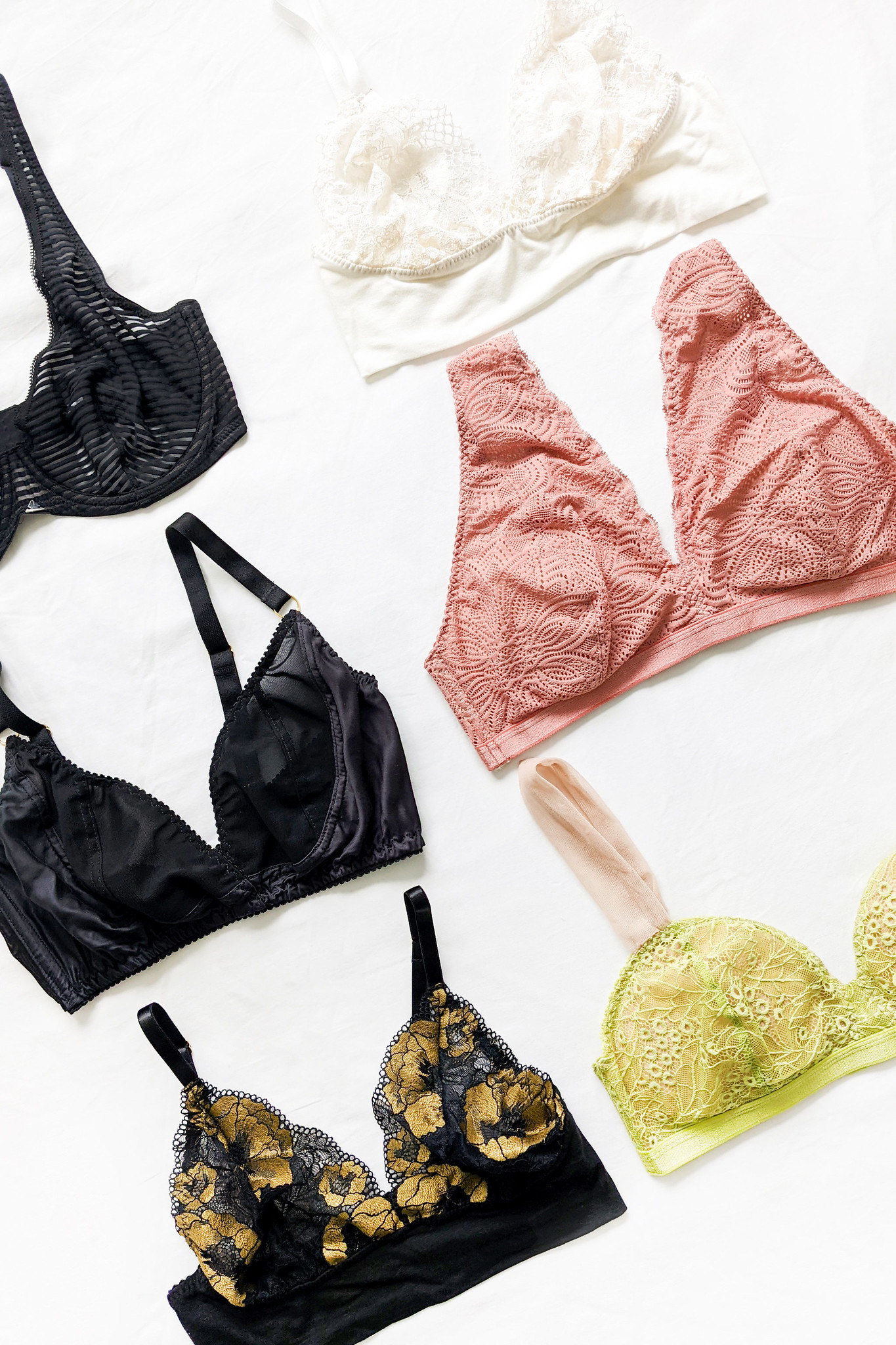
Sustainable Underwear Brands to Know
There are some things that are worth spending the money. Underwear is one of them. It's the foundation to feeling comfortable and looking confident in your clothes. So having well-fitting lingerie is important. Many people wear the wrong size bra so if you hate wearing them, chances you're wearing the wrong band, cup, or both. I highly recommend following this guide to find a better fit.
I've included a broad range of brands here rather than pretending there's one perfect sustainable underwear company. Some have much stronger sustainability credentials than others, and I've tried to explain what each brand actually does rather than simply repeating their marketing claims.
Most sustainable brands in this shopping guide provide classic everyday underwear basics. Although there are a few options if you're looking for something more fun. If you need to restock your underwear drawer, these are the best sustainable lingerie brands to shop with, along with my personal favourites.
A-dam
A-dam makes fun basics in a range of colours and prints, created in Amsterdam and produced around the world. They use eco-friendly materials including GOTS cotton, regenerated nylon, and recycled polyester. They actively limit the amount of chemicals, water, and waterwaste used in production. However, there is no evidence they try to minimise textile waste. A-dam uses factories that are certified by Social Accountability International but doesn't disclose where the final stage of production is carried out. Workers are paid a living wage throughout most of their supply chain.
Ama Ella
There is little to no information about Ama Ella's sustainability policy or ethical practices other than claiming it's something they prioritise. They do, however, use organic cotton (although not certified) for most of their range and offer a recycling scheme.
Beija
There is a small yet concise sustainability policy on Beija's website. It covers where their products are manufactured and what materials are used to make them. Fabric is sourced from Europe and the Far East, manufacturing is carried out in China and Sri Lanka, and the final design, sample making, and fitting is completed in London. Factories undergo yearly social audits and work to the Ethical Trade Initiative base code. As a small brand, their sustainability goals are being developed. They are focused on streamlining their business model, reducing waste, avoiding plastic and re-using deadstock fabric whatever they can.
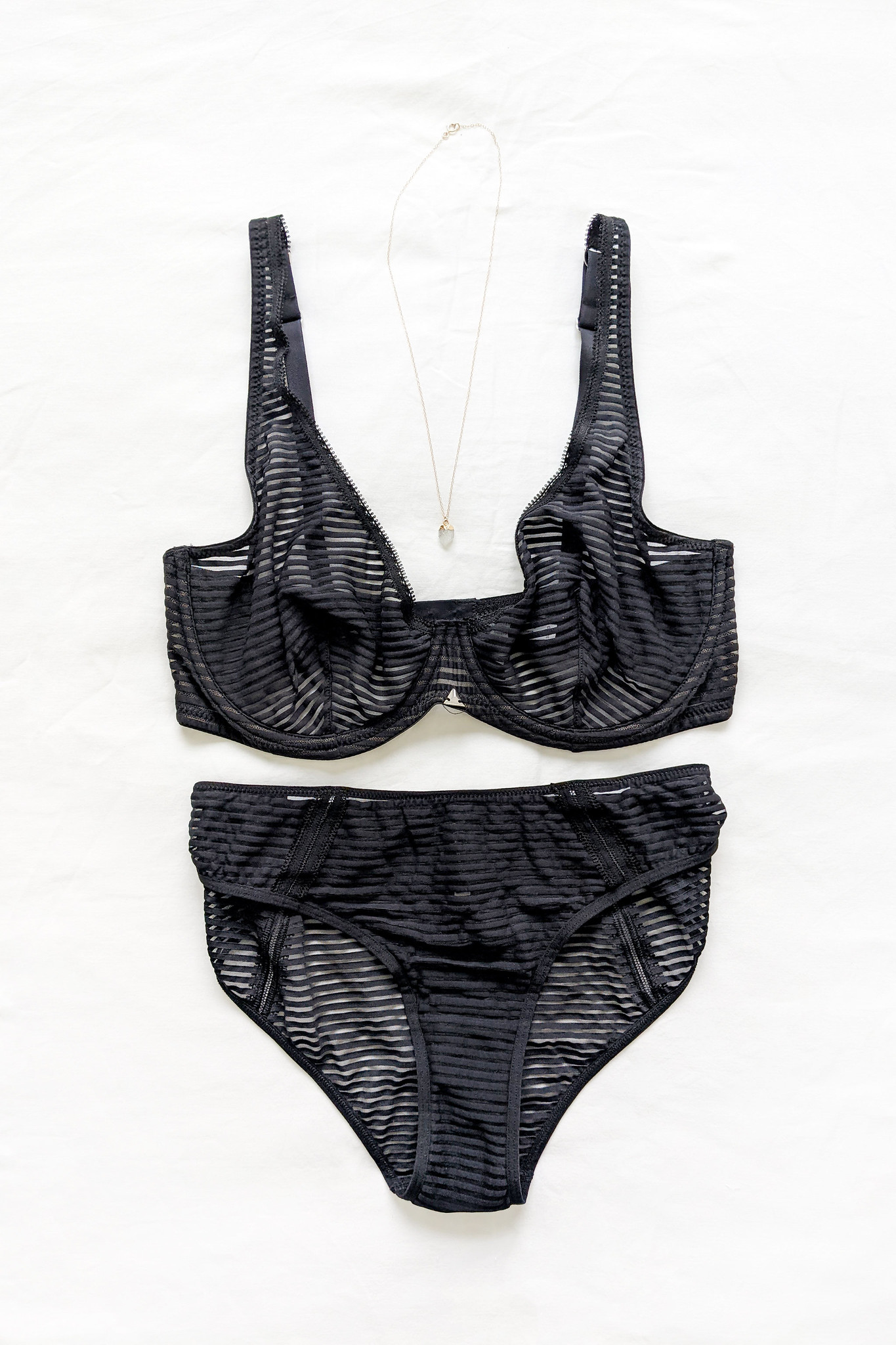
What I particularly like about Beija is their consideration to style and fit. They have an extensive bra fitting guide to help find your ideal size. I used the fit finder to pick the Stripes Y Bra with matching briefs that Beija gifted me for review. The three designs (X, Y, Z) are specifically created to suit different cup sizes to provide the right structure and support. There are extensive notes on fit under each product with advice on what breast shape its best suited to. It's rare to find that much consideration given to such an important aspect of our wardrobe.
Beija make the perfect bras for when your outfit calls for extra structure. The Stripes Y Bra is non padded with an underwire designed to give larger busts support without compromising on comfort. The soft cups made from tricot fabric with a unique weave that allows it to be smooth and cool against the skin. The sturdy underwire provides extra support, improving posture and relieving stress from the shoulders and back.
Brighton Lace
Brighton Lace provides brief details on their sustainability policy. The brand focuses on 'earth-friendly and rescued fabrics' from 'environmentally and socially responsible suppliers'. Their range of underwear is made from oeko-tex certified lace, GOTAS certified organic cotton, hand-dyed linen, and vintage cashmere. Purchased in small batches to minimise waste, fabrics and packaging is sourced locally to reduced their environmental impact. The underwear is made to order, avoiding to risk of any surplus unsold stock. Every scrap is reused or recycled, and no plastic is used in their packaging.
You'll find a range of underwear from cotton basics to lace sets on their website. Sizing is generous for such a small brand, going up to a size 20-22 in briefs. They even have specific collections to cater to smaller busts (A-D) and fuller ones (DD-G) making it easier to shop for your needs. I was gifted the Organic Cotton Bralette and High Waisted Knicker Set. I sized up to a large and I'm glad I did. As a 36D, I fit comfortably into the bralette; any smaller and it wouldn't be as comfy.
This is the kind of cute no-fuss basic set that every underwear drawer needs. It's well made from breathable stretch jersey. The fabric is thick giving the set a snug fit against the skin that makes you feel comfortable and supported. I like the longline style of the bralette that has a band of elastic for added support.
ColieCo
If you're on the hunt for sexy lingerie that's also sustainable, your best option would be ColieCo. These pieces are handmade to order using eco-friendly materials as well as deadstock fabric. They have entire collections made from reclaimed prints, sustainable mesh, and recycled RPET. Manufacturing takes place locally to reduce their carbon footprint. Low-waste techniques help minimise textile waste while the use of eco-friendly materials limits the chemicals and water used in production. There is no Code of Conduct available but they do provide a formal statement on workers rights.
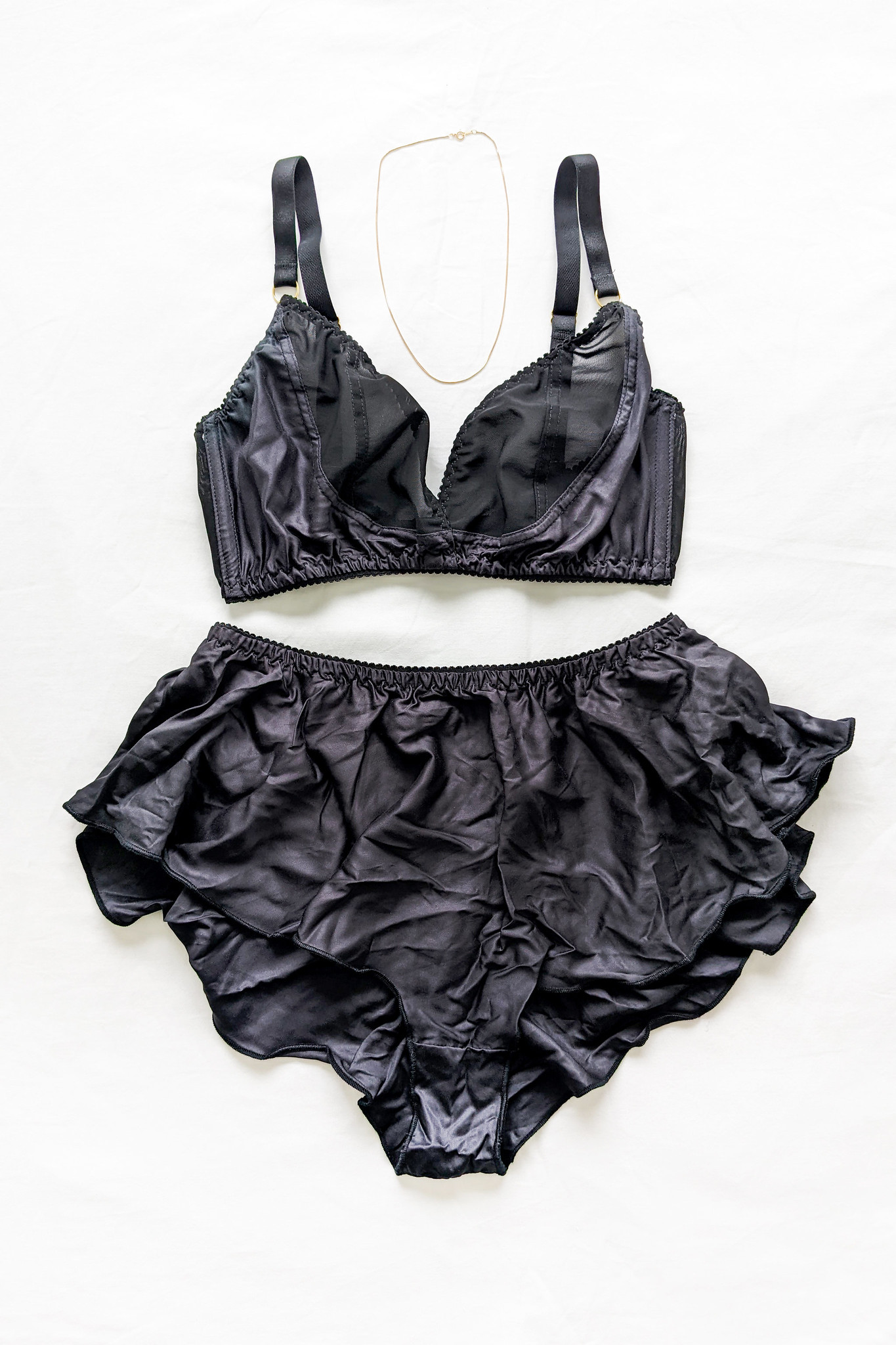
ColieCo have such a great range of underwear, from basics with a twist to sexy lingerie. It's rare to see such a wide variety of styles and sizes. I was sent a set of Araya Bra and Araya Pants made from organically-grown bamboo silk fabric and sheer mesh reclaimed from fast fashion line ends. While the bra is wire-free, it still offers support from the structured demi-cup style. It's a great bra to have if you want extra support and an improved shape under outfits.
The silky bamboo fabric, sheer mesh panels, and demi-cup style makes the Araya set luxurious to wear. Both the bra and knickers feel comfortable yet look sexy. If you're looking to stock your underwear drawer with cute basics, flirty prints, or racy sets, ColieCo have you covered.
Elliot Organics
Underwear made by Elliot Organics is made in limited runs with quality and sustainability being a priority. Fabric is sourced from GOTS certified manufacturers with the entire manufacturing supply chain being certified to the highest Global Organic Textile Standard. Two cooperatives, one in Uganda and the other in Kyrgyzstan, supply the organic cotton at fair trade prices. Production takes place in a small factory near Barcelona.
Flissie
Flissie is a UK brand making women's bamboo boxer shorts. Their boxers are made from 95% Tanboocel bamboo viscose and 5% elastane, with a longer leg designed to prevent chafing and a wide waistband that doesn't dig in. They come in two lengths—6" and 9" for more coverage—and sizes run from UK 8 to 30. Flissie's bamboo is produced using a closed-loop process, where the water and chemicals used during production are recovered and reused, and the bamboo is sourced from FSC-certified forests.
Honest Basics
Honest Basics outlines its sustainability policy, highlighting how they manufacture and produce their basics in a way that minimise their impact on the environment. Only GOTS-certified organic cotton is used, reducing the chemicals and water used in production. Their 'partner-factories' are located in India and Bangladesh, chosen based on a sustainability criteria outlined here. There's no information on living wages or detailed workers rights. Honest Basics provides itself on being an inclusive and diverse team.

Luva Huva
Luva Huva is a UK-based brand focusing on using natural, eco-friendly materials to make their small range of underwear. These fabrics include organic cotton, bamboo, soy, and hemp. They take advantage of otherwise wasted materials, such as deadstock and off-cut fabrics, whenever possible to produce limited edition ranges. They support UK fabric manufacturing and production having worked with the last UK-based elastic manufacturers. Manufacturing of their underwear takes place locally with products being made to order in-house by a small team. Orders are sent in 100% plastic-free packaging made from recycled and recyclable materials.
If you're looking for underwear that looks sexy and feels comfy, Luva Huva blends the two perfectly. I was gifted the Emily Golden Bra and Emily Ivory Bra for review. Both are made from recycled fabric including oeko-tex certified bamboo jersey and lace. These two pull-on bras have all the comfort of a basic jersey bras with all the sexiness of lace. They're a great addition to my lingerie collection, providing a great option for when I want to look cute but feel comfy.
What makes Luva Huva special is their customisable service. Since their bras are made to order, you can choose between a range of standard band and cup sizes or opt for custom sizing. If you're unsure about fit, the Luva Huva team can help with a bra tailored specifically to you. The standard 34-36" band fit me perfectly being a 36D.
Magi
Magi makes a small range of simple basics. They provide a brief FAQ detailing a few main sustainability queries. They state their fabrics are ethically sourced from reputable supplies, with everyone in the supply chain being paid and treated fairly. Their fabric supplier is in China from a factory using solar energy. The textiles are GOTS certified and audited by the Fair Wear Foundation.
Molke
Super fun underwear made by a team of staff who are paid a Real Living Wage. Molke makes some of their products on their own premises in Perthshire, Scotland. Other items are made in European factories including one in Portugal that produces the fabric and finishes the products. Waste scraps are saved to be used as gussets in briefs or made into other products. There's very little solid information other than the promise that Molke works closely with their factories to ensure social and environmental standards.
Olly
A range of romantic lace underwear in flirty styles. Olly use OEKO-TEX certified recycled lace, tencel, and GOTS cotton to make their range of lingerie. Using these fabrics helps to reduce the chemicals and water used in production. There are hints the brand keeps manufacturing local to limit their carbon footprint by using lace, tulles, clips, straps, and slides from France, Italy, Austria, and Germany. There is no information on their Code of Conduct, living wages, or workers rights.
Organic Basics
A super popular sustainable brand offering standard underwear basics. They use eco-friendly materials including organic cotton to help limit the amount of chemicals used and water wasted. Renewable energy is used in the supply chain to reduce its climate impact. They do not provide a Code of Conduct but do have a formal statement, which covers workers rights and ensures a living wage. Most of their supply chain is traced with audits of most of its suppliers being carried out.
People Tree
People Tree make simple basics that are either certified by GOTS or Fairtrade International - Small Producers Organisations. They are also a member of the WFTO Guarantee System, which ensures payment of a living wage across most of its supply chain. A very limited range of underwear is available, although it is made to the best standards. Made using Global Organic Textile Standard (GOTS) cotton and non-toxic dyes, these eco-friendly materials limit the use of chemicals and water waste created in production.
Pico
A very limited range of underwear is available from Pico. While there is no evidence they are taking steps to reduce energy use or greenhouse emissions; their use of eco-friendly materials, including GOTS cotton, helps reduce their climate impact. All Pico products are Fairtrade International - Small Producers Organisations certified, and their supply chain can be traced.

Rozenbroek
Unique underthings in bright colours and original designs. ROZENBROEK's products are made from eco-friendly materials, using renewable energy that reduces their climate impact. Offcuts are reused to minimise textile waste while the use of GOTS cotton helps reduce chemical and water water. Production takes place in the UK with factory checks happening regularly. Workers are paid a living wage at some points in the supply chain.
Semi/Romantic
Semi/Romantic offers a range of basics with a slight twist. Using Tencel Jersey and recycled lace, Semi/Romanic manfactures and produce their range of underwear in a Portugese factory. This factory uses sustainable materials, like Tencel and BCICotton, to produce undergarments. iT HAS 'efficient water usage' and solar energy to HELP reduce carbon emissions. Semi/Romantic provides limited information on materials used, workers rights, or even their environmental policies.
Stella McCartney
A luxury range of lace underthings in original colours and patterns. Stella McCartney has policies in place to prevent deforestation, and uses eco-friendly materials to reduce their carbon footprint. They're also 'committed to circularity' by using renewable and recycled materials. The range of underwear does feature microfibers and the cotton items don't appear to be made using GOTS Organic Cotton.
Thought
Thought have a range of fun, patterned basics. They use eco-friendly materials, including organic cotton, to produce its clothing range. Climate impact is reduced through their use of sea freight for shipping products. Offcuts are reused to minimise textile waste while sustainable fabrics limit the chemicals and water used in production. Thought have a Code of Conduct covering the ILO Four Fundamental Freedoms principles. They are also a member of the Ethical Trading Initiative. Their supply chain can be traced and workers are paid a living wage across part of its supply chain.
Underprotection
Underprotection have an extensive sustainability policy covering their materials, production, and code of conduct. They are B Corp certified focusing on sustainable development goals that have a direct impact on important issues such as climate action, gender equality, clean water, and responsible consumption. Underprotection offer a repair service that encourages you to fix your lingerie in exchange for 'first aid rewards' (credit). There's also a take-back program to deal with products that reach the end of their life.
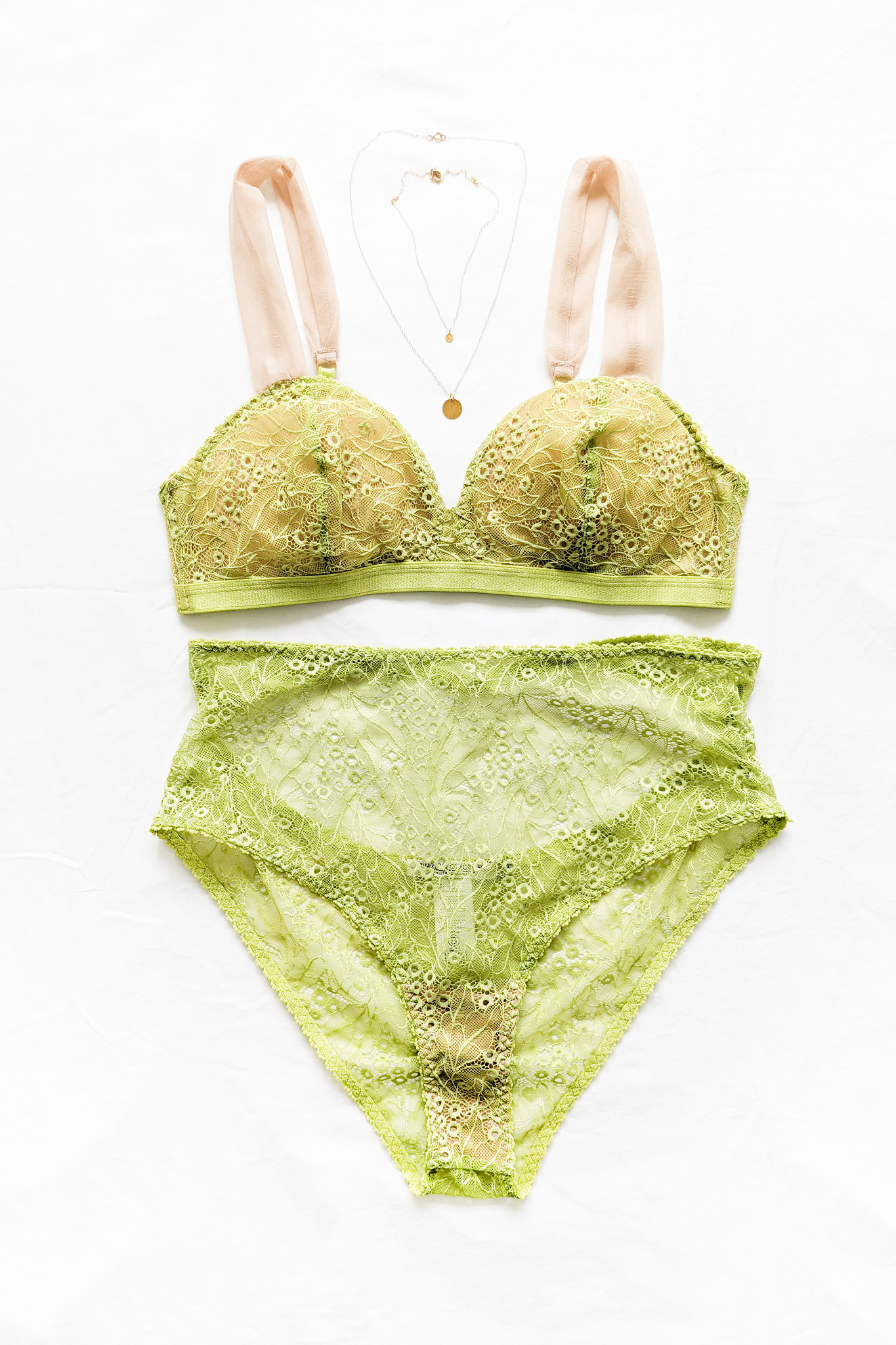
Everyone deserves underwear that makes them feel amazing. For me, Underprotection's lingerie does exactly that. I was sent two sets for review, both made from 100% recycled materials. They come in a range of styles from simple basics to classic lingerie. I opted for Luna Bra and High-String Briefs in rose, along with the Emma Bra and High-Waist Briefs in green.
The size guide made it easy to get the right fit, and while I'd like to see Underprotection extend their size range, the XL fits me perfectly as a 36D. The fabric, although made from recycled polyester, is incredibly soft and comfortable against the skin. Varying degrees of support is offered depending on the style you choose, from the light balconette shape to the more supportive high apex designs. Both have removable padding, which is a useful addition when an outfit calls for it.
Underprotection proves sustainable underwear doesn't have to mean boring basics. You can have cute, flirtatious lingerie without overspending or compromising on comfort. These two sets look amazing on and make me feel phenomenal. Everyone needs that from their underwear.
Vatter
Vatter makes triangle bras in limited sizes and styles. They trace their entire supply chain, using third party audits to check in with final stage of production suppliers. A living wage is provided throughout their entire supply chain. The products they create are certified byGlobal Organic Textile Standard (GOTS) and packaged in recycled packaging.
Woron
Soft bras in a small selection of designs are what Woron focuses on. They use a combination of eco-friendly materials and low impact non-toxic dyes to create their products. They do not have a Code of Conduct, and the final stage of production is carried on in countries with a high risk of labour abuse. Their supply chain is traceable, and provides a living wage to part of it.
Y.O.U.
Y.O.U make a range of simple basics in a selection of colours and patterns using GOTS cotton. Offcuts are recycled to minimise waste, and chemicals and water are limited to reduce climate impact. All Y.O.U. products are fully certified by Fairtrade International - Small Producers Organisations in a fully teaceable supply chain. Workers are paid a living wage throughout most of the supply chain.

Best Sustainable Bras for Larger Busts
Finding sustainable bras for larger busts is one of the biggest frustrations when shopping for ethical underwear. A lot of sustainable lingerie brands specialise in bralettes and soft, wireless styles, which are lovely if that's what you want but aren't particularly helpful when you need more support.
Of the brands I've included here, Beija, Luva Huva, Molke and Underprotection are worth looking at if you want something more supportive, although the available sizes and styles vary. Beija is particularly good at explaining the differences between its bra designs and who they're intended to fit, while Luva Huva offers custom sizing on some of its made-to-order styles. I'd always check the individual size guide rather than assuming your usual size will be the right one.
Best Sustainable Knickers and Everyday Underwear
For most people, sustainable bras and everyday knickers are probably the easiest place to start. You don't need to completely rethink your underwear drawer; simply replacing worn-out pairs with better-made alternatives when they need replacing is a good first step.
Organic cotton is one of the materials I look for most often because it's breathable, comfortable and widely available in sustainable and certified versions. You'll find organic cotton underwear from brands including People Tree, Y.O.U., and Honest Basics. If you prefer something a little prettier, there are also brands such as Brighton Lace, ColieCo and Underprotection that prove sustainable underwear doesn't have to mean beige basics.
Best Sustainable Bamboo Underwear
Bamboo underwear has become increasingly popular because bamboo fabric is incredibly soft, breathable and comfortable against the skin. It's also a useful option if you prefer plant-based fibres or, like me, don't wear wool.
But bamboo isn't automatically sustainable simply because the original plant is fast-growing and renewable. Bamboo needs to be processed into a usable textile, and the environmental impact depends largely on how that process is carried out. This is why I prefer brands that are transparent about the type of bamboo fibre they're using and how it's manufactured, rather than simply labelling something "eco-friendly bamboo".
Flissie is one option worth looking at if you're interested in sustainable bamboo underwear. Their women's boxer shorts are made from 95% Tanboocel bamboo viscose and 5% elastane, with a choice of 6-inch and 9-inch legs. The longer style is particularly useful if you're looking for underwear that helps prevent thigh chafing, while the wide waistband is designed to stay comfortable without digging in. Their Tanboocel bamboo is produced using a closed-loop process, with the chemicals used during production recovered and reused.
Best Vegan Underwear
If you avoid animal fibres, it's worth checking the materials as carefully as you would when shopping for any other sustainable clothing. Most underwear is made from cotton, synthetic fibres or a mixture of the two, but you'll also find wool, silk and other animal-derived materials in some lingerie.
Organic cotton and bamboo-based fabrics can be useful alternatives if you're looking for vegan underwear, although, as with any sustainable material, it's worth looking beyond the fibre itself and checking how it was produced. Recycled synthetics can also be a more considered option than virgin polyester, particularly for underwear where stretch and durability are important.
It's also worth checking the details beyond the main fabric. Elastic, trims, dyes, lace and other components can contain animal-derived materials, and sustainability claims don't necessarily mean a product is vegan. If you're avoiding animal-derived materials completely, check the full product composition or the brand's vegan policy before buying.
The brands in this guide include a mixture of natural, recycled and regenerated fibres, so always check the individual product composition if avoiding animal-derived materials is important to you.
How to Choose Sustainable Underwear
Choosing sustainable underwear doesn't need to involve researching every brand's entire supply chain. There are a few things I look for that make the decision much easier.
- Start with the material. Look for organic cotton, recycled fibres or other lower-impact materials, but don't assume a fabric is sustainable simply because the name sounds environmentally friendly. Bamboo is a good example: the way bamboo is processed into viscose matters just as much as the fact that bamboo is a renewable crop.
- Look at how and where it's made. A good sustainability policy should tell you something about manufacturing, workers' rights, materials and the supply chain. If a brand only talks about how soft its fabric is and calls it "eco-friendly", I'd be sceptical.
- Check the fit and sizing. This is particularly important with bras, but applies to knickers too. A garment that doesn't fit properly isn't going to become a wardrobe favourite just because it was made sustainably.
- And finally, consider durability. Underwear gets washed frequently, so construction matters. A slightly more expensive pair that stays comfortable and wearable for years can be a better choice than repeatedly replacing cheaper pairs.
Do You Need to Replace Your Underwear?
Probably not as often as the internet would have you believe.
There's a lot of advice online about replacing underwear every six months or even every year, but I don't think there's much value in following an arbitrary timetable. There isn't a magic expiry date on a pair of knickers.
If your underwear is still comfortable, fits properly and is in good condition, keep wearing it. Replace it when the elastic has gone, the fabric has become worn or the garment is no longer doing its job. This is especially important when we're talking about sustainable fashion: throwing away perfectly good underwear in order to replace it with something supposedly more sustainable creates another unnecessary purchase and another piece of textile waste.
When something does need replacing, that's the opportunity to choose a better option. Look for underwear you'll actually enjoy wearing, made from materials you feel comfortable buying, and from a brand that is transparent about how it operates.
I also think it's worth paying attention to how much underwear you actually own. You only really need to buy enough to comfortably get through your laundry routine.
I've never thought building a sustainable wardrobe meant finding a perfect, sustainable version of every single thing you own.
Sustainable underwear doesn't need to mean replacing everything in your drawer or finding the most "eco-friendly" option available. Buy fewer pairs, choose underwear that fits properly, look after it and wear it until it genuinely needs replacing. When you do need something new, look for sustainable underwear brands that are transparent about their materials, manufacturing and workers' rights rather than relying on vague claims about being "eco-friendly".
And don't feel like you have to choose between sustainability and having underwear you actually like. There are plenty of options for comfortable basics, supportive bras, pretty lingerie and even bamboo boxer shorts. Sustainable underwear doesn't have to be boring; it just needs to earn its place in your drawer.